Mercedes DPF Warning Light
You’re on the A11 heading back toward Wymondham when a small symbol appears on the instrument cluster. The engine sounds the same. The car pulls the same. Nothing feels wrong, yet something’s clearly up.
You look it up, and the diesel particulate filter comes up as one possible explanation. But a warning like this can flag more than one thing, so you’re left unsure how serious it is, what to do about it, or whether the DPF is really the culprit.
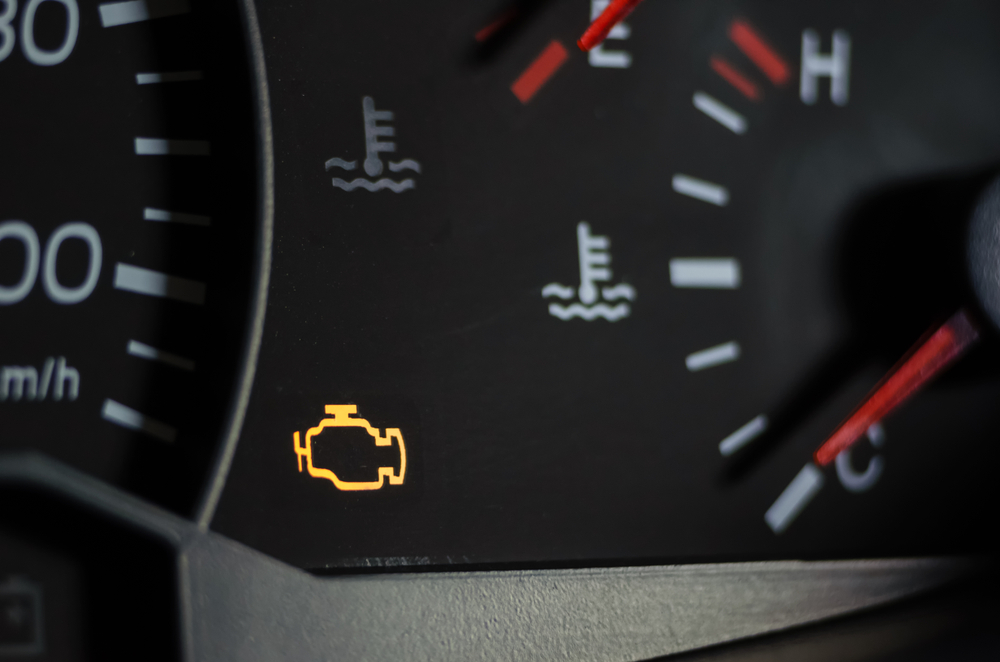
When a warning shows on your Mercedes diesel dashboard, often the engine management light, the emissions system is flagging a problem that may involve the diesel particulate filter. The cause could be soot loading, a regeneration that hasn’t completed, or a separate fault. Leaving it risks reduced performance, limp mode, MOT failure, and a repair bill that climbs over time.
This guide walks through how the Mercedes DPF works, what might trigger a dashboard warning, what to look out for, and what to expect when you bring your Mercedes to CSN Autos in Wymondham.
What the Diesel Particulate Filter Does on Your Mercedes
Fitted inside your Mercedes diesel’s emissions system is a component called the diesel particulate filter. Its role is to capture the particulate matter (soot) that combustion produces, before it can reach the exhaust pipe.
Picture a fine mesh that catches microscopic particles with each combustion cycle. Soot builds up inside the DPF over time, and that accumulation is expected and part of the design.
The important thing is that the DPF isn’t built to hold soot forever. Your Mercedes runs a self-cleaning cycle called regeneration that raises the temperature inside the filter so the collected soot is oxidised and reduced, at intervals set by how you drive. When it completes successfully, the filter stays clear and you may not notice a thing.
When that cycle can’t finish, soot keeps building. The DPF becomes increasingly restricted, and the car responds by activating the warning on your dashboard.
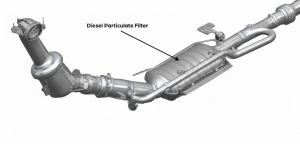
The Self-Cleaning Cycle: How Mercedes DPF Regeneration Operates
Mercedes DPF regeneration is how your car reduces the accumulated soot in the diesel particulate filter. It’s an automatic cycle that runs without any input from the driver.
For regeneration to take place, the engine has to reach and hold specific operating conditions over an extended period, in practice a steady drive at a consistent speed once it’s warmed through. What’s required varies between Mercedes models and how the car is driven. When those conditions are met, exhaust temperatures rise high enough for the accumulated soot to be oxidised and reduced, and the engine management system can raise exhaust temperature itself to support this.
There’s no indicator on the dashboard and no change in how the car feels. The whole thing runs quietly in the background while you drive.
Regeneration isn’t a one-off event. It has to happen on a recurring basis to keep the filter from filling up, how often depending on how the car is used. If the vehicle gets those sustained driving windows, the system stays balanced. When they don’t come, the filter gradually becomes restricted.
What Can Trigger a Mercedes DPF Warning?
The most frequent reason for a Mercedes DPF warning to show up is a driving pattern that doesn’t let the engine complete regeneration. Short trips around town, constant stopping and starting, and journeys that finish before the engine has held the right conditions long enough all contribute. Soot collects with no chance to reduce it, and once the restriction reaches a threshold, the system triggers the warning.
Driving patterns aren’t where the list ends, though. A problem in the engine, the emissions system, or one of the sensors keeping watch on the filter can hold regeneration back too, even when the driving ought to be enough. That’s the value of a thorough assessment: it separates a restriction that’s down to how the car’s driven from one caused by a fault that needs repair.
If a warning has appeared on your Mercedes dashboard, it pays to act sooner rather than later. Speak to CSN Autos on 01953 425983 and we’ll talk you through what’s involved.
What a Mercedes DPF Warning Can Point To
How a DPF fault appears varies from one Mercedes to another: the engine management light on some, a filter symbol or a dashboard message on others. Whichever it is, the warning alone can’t tell you exactly what has gone wrong.
That’s why guessing at the cause, or assuming the worst, rarely helps. The dependable move is to have it assessed by a professional, especially if the warning stays on or comes back.
The sooner that’s done, the better the chance of pinning down the cause while the repair is still a contained one.
If the warning’s still showing and you’d like it looked at, get in touch with CSN Autos on 01953 425983. We’ll get to the bottom of it and advise on the best next steps.
What Happens When a Mercedes DPF Warning Goes Ignored?
Sometimes a DPF warning clears by itself, once the car gets a long enough run for a regeneration to finish. When it doesn’t, though, or the cause isn’t really the driving, soot keeps collecting, the restriction worsens, and exhaust flow is increasingly compromised, with the engine working harder to compensate.
The first signs tend to be a gradual drop in performance, changes in fuel consumption, and the engine running rougher than it should. Those changes creep in slowly, which makes them easy to dismiss.
If the restriction keeps progressing, your Mercedes can enter limp mode, a protective measure that caps power to prevent further damage. With a Mercedes DPF blocked that far, the car can feel flat and may not keep up with normal traffic.
The MOT is another consideration. On any diesel first used on or after 1 July 2008, an engine management light lit at the test is a fail by itself. And a heavily restricted or damaged filter that pushes emissions past the permitted limits will fail too. If you’ve been carrying a warning, get in touch with CSN Autos on 01953 425983 and we’ll tell you what we find.
How We Investigate a Mercedes DPF Fault
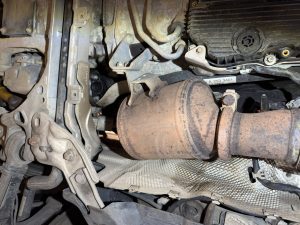
At CSN Autos, a Mercedes DPF investigation doesn’t begin and end with a fault code. It begins with understanding the full picture.
We’ll ask about the warning: when it first showed, what you’ve noticed since, how the car’s been behaving, and the sort of driving you do day to day. That gives our technicians the context to judge whether the restriction comes from how the car’s used or from an underlying fault blocking regeneration.
From there, they run a thorough technical evaluation on manufacturer-level software built for Mercedes systems. It lays out in detail what the emissions system has been doing, and why the filter hasn’t been finishing its self-cleaning cycle.
The aim isn’t to clear a warning and send you on your way. It’s to trace the root cause and put it right at source. Before any work starts, we’ll explain what we’ve found and what it calls for, so you can decide with the full picture. Every vehicle presents differently, and the next steps depend on what the evaluation reveals.
Why Manufacturer-Level Software and Technician Expertise Matter
A generic code reader can tell you if a DPF fault code is present. What it can’t tell you is why it’s there.
So what does that mean in practice? Getting to the root cause takes manufacturer-level software that can read the Mercedes-specific data a generic scan tool can’t: DPF-related values, sensor readings, and operating data. Without that depth, the picture stays incomplete.
The software is only part of it, though. A code that flags excessive soot can have any of several causes sitting behind it. Whether it’s a Mercedes C-Class DPF fault, a warning on an E-Class, or a GLC showing the same restriction, it takes a technician with hands-on Mercedes diesel experience to work through the data and land on the real cause.
It’s that pairing of manufacturer-level data and the skill to interpret it that marks out a real investigation from a surface-level scan. Without both, a DPF fault can be misdiagnosed, or only half sorted.
If a warning on your Mercedes diesel has left you unsure what’s going on, our technicians in Wymondham can help. Speak to CSN Autos on 01953 425983 and we’ll get you booked in.
Why Choose CSN Autos, Wymondham for Your Mercedes DPF?
Catch a DPF restriction early and the filter can often be saved rather than replaced. Which way it goes depends on how carefully the fault is investigated, and on getting the root cause right first time. So the garage you pick is a decision worth getting right.
At CSN Autos in Wymondham, we work on Mercedes diesel models as part of our day-to-day workload. Our technicians have the hands-on experience and manufacturer-level equipment to pinpoint what’s causing the restriction, carry out the repair to the correct standard, and confirm the emissions system is operating as it should.
Here’s what you can expect when you bring your Mercedes to us:
- A thorough technical evaluation using manufacturer-level software designed for Mercedes systems
- Technicians with hands-on experience of Mercedes diesel engines and DPF faults
- Multiple industry awards: South Norfolk Small Business of the Year 2024, Top Garage Finalist 2023 and 2024
- A 12-month parts and labour guarantee on all work carried out
- A courtesy car available so your routine isn’t interrupted while we work on your Mercedes
What {{review-count}} Google reviewers in Wymondham tell us, alongside the {{average-rating}} rating, is that the thoroughness of our work is what they remember.
Noticed a DPF warning on your Mercedes dashboard? Contact CSN Autos on 01953 425983. We’ll explain what the assessment involves and find a time that works for you.
Mercedes DPF: Frequently Asked Questions
Does a blocked DPF mean a failed MOT?
It can. On any diesel first used on or after 1 July 2008, an engine management light on at the test is a fail in itself. Separately, a Mercedes DPF blocked with enough soot can send emissions over the permitted limit, and the tester also checks the filter hasn’t been removed or tampered with. If your MOT is coming up and the warning’s still there, get it assessed first. Speak to CSN Autos on 01953 425983.
What does DPF regeneration actually do?
It’s an automatic cycle your Mercedes runs to deal with the soot in the diesel particulate filter: exhaust temperatures are taken high enough for the collected soot to oxidise and reduce. The engine has to hold the right operating conditions for long enough to get there. If your driving doesn’t give it that window, soot keeps collecting and a warning appears on the dashboard.
Which Mercedes diesels get DPF problems?
Any Mercedes diesel with a particulate filter can develop this kind of fault. A Mercedes C-Class DPF fault is among the most reported, and the E-Class and GLC show up in numbers too, though they aren’t alone. Wherever it’s fitted, the filter has the same purpose; it’s the surrounding system, and the ways things go wrong, that differ from one model to the next. CSN Autos can carry out a full technical evaluation whatever you drive.
Is it OK to keep driving with the warning showing?
Whether it’s safe hinges on what the problem is. A warning has plenty of possible triggers, so alone it doesn’t pin things on the DPF. Go by the dashboard, and get the car assessed if the warning won’t clear or keeps coming back. If it says to stop or seek help, do that and ring CSN
Ring CSN Autos on 01953 425983 and we’ll advise on your next step.