Diesel Particulate Filter Explained: How It Works and Why It Matters
DPF… If you drive a diesel, you’ve probably encountered the term, whether it’s on a service report, in a conversation with a technician, or next to a warning light on your dashboard.
The thing is, if you own a diesel-engined car, you probably know it has a diesel particulate filter (DPF). What’s less clear for many is how it works, what keeps it clean, or what can go wrong.
A diesel particulate filter (DPF) is fitted to your exhaust to trap soot (particulate matter) before it leaves your vehicle. It cleans itself through regeneration, burning away soot at high temperature when engine and exhaust conditions allow. Short journeys are the most common reason it fails, though faults can prevent it. Without regular regeneration, the filter becomes increasingly restricted.
However, your DPF doesn’t work in isolation.
Other parts of your diesel emissions system can influence the amount of soot reaching the filter, or produce warnings that mimic DPF faults, which is why we cover them later in this guide.
Throughout this guide, you’ll uncover how your diesel particulate filter works, what else has an impact, and how to keep it performing the way it should.
What Is a Diesel Particulate Filter and What Does It Do?
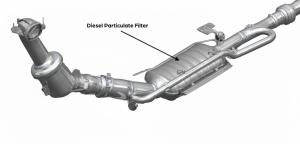
The DPF sits within the exhaust system, where it captures soot before it leaves the vehicle
Euro 5 emissions regulations, which took effect around 2009, effectively made the diesel particulate filter a requirement for new diesel cars in the UK. It’s fitted to the exhaust, catching soot from the engine before it can enter the atmosphere.
Over time, soot builds up in the filter, and if nothing intervenes, that accumulation can restrict it. Your DPF is designed to clean itself, burning away trapped soot at high temperature when the engine and exhaust create the right conditions.
This self-cleaning process is called regeneration, and it’s central to everything else in this guide.
All newly registered diesel cars have had to meet Euro 6 standards since September 2016, which set tighter limits on nitrogen oxide (NOx) and particulate matter.
Modern diesel vehicles use a combination of emissions-control systems to achieve these targets, and the DPF plays a key role. Since 2014, evidence of DPF removal, tampering, or emissions-related faults can result in an MOT failure.
That’s the diesel particulate filter explained in terms of what it does and why it matters. Now, let’s look at how regeneration actually works.
How Does a DPF Work? The Filter and Its Self-Cleaning Process
So, how does a DPF work in practice? The filter itself contains a honeycomb-style structure, made from ceramic in most cases, that catches soot particles as exhaust gases pass through. This design is effective at trapping particles, but it also means the filter fills progressively with use.
Your car handles this through automatic cleaning when the right conditions are present. There are usually two main forms of regeneration:
- Passive regeneration: This occurs naturally when sustained driving keeps exhaust temperatures high enough to burn away the accumulated soot. Most drivers won’t notice it happening.
- Active regeneration: The engine management system initiates this when soot loading reaches a set threshold, raising exhaust temperatures through a series of engine management strategies. Some drivers notice a slight change in engine note or marginally higher fuel consumption.
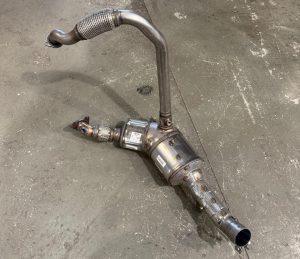
A removed DPF and exhaust assembly ready for inspection and servicing
The catch is this…
If the engine is switched off before the process completes, regeneration is interrupted, and some of the trapped soot may stay in the filter.
When this happens more than once, soot can keep building up, and warning lights may eventually appear.
That’s the diesel particulate filter explained: two main regeneration processes, both dependent on the engine and exhaust system, maintaining the right conditions to burn away accumulated soot. It’s one of the main reasons longer journeys can help your diesel.
Why Does My Diesel Car Need Long Journeys? How Short Trips Affect Your DPF
If you’ve ever wondered, “Why does my diesel car need long journeys?”, your DPF is one of the main answers. This may be the most important thing to understand as a diesel owner.
Short trips, school runs, and day-to-day town driving can prevent your exhaust system from reaching the conditions regeneration requires. When the process is interrupted time after time, soot continues to build up, and that can lead to dashboard warnings and the need for professional attention.
Your vehicle’s DPF needs specific temperature and operating conditions, and longer, uninterrupted journeys are where those conditions are most likely to be met.
If you’ve noticed a DPF warning light or a change in how your diesel vehicle performs, our team at CSN Autos, Wymondham, can assess your DPF and advise on the right next step.
What Else Can Affect Your DPF?
Your car’s EGR (Exhaust Gas Recirculation) valve plays a part in controlling harmful emissions. It recirculates a portion of exhaust gas back into the engine.
Soot and oil vapour can leave carbon deposits on the Exhaust Gas Recirculation valve over time, causing it to become restricted, slow to respond, or stuck.
Why does that matter for your DPF?
Depending on the fault, EGR-related issues can push soot production higher, potentially placing additional demand on the filter.
It’s worth noting that diesel vehicles registered after September 2016 are likely to have an AdBlue system fitted.
So what is AdBlue and why does it matter for your diesel emissions?
AdBlue is a fluid that’s injected into the exhaust that helps the SCR (Selective Catalytic Reduction) catalyst turn nitrogen oxides into nitrogen and water vapour.
Your car monitors AdBlue levels and will warn you when running low.
On some vehicles, an empty AdBlue tank or a system fault can restrict performance or stop the engine from starting. Those symptoms can overlap with DPF warnings, which is why an accurate diagnosis may need to take both systems into account.
Signs Your DPF May Need Professional Attention
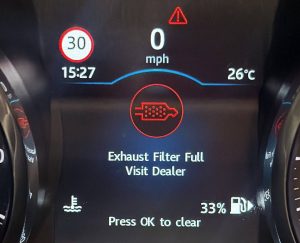
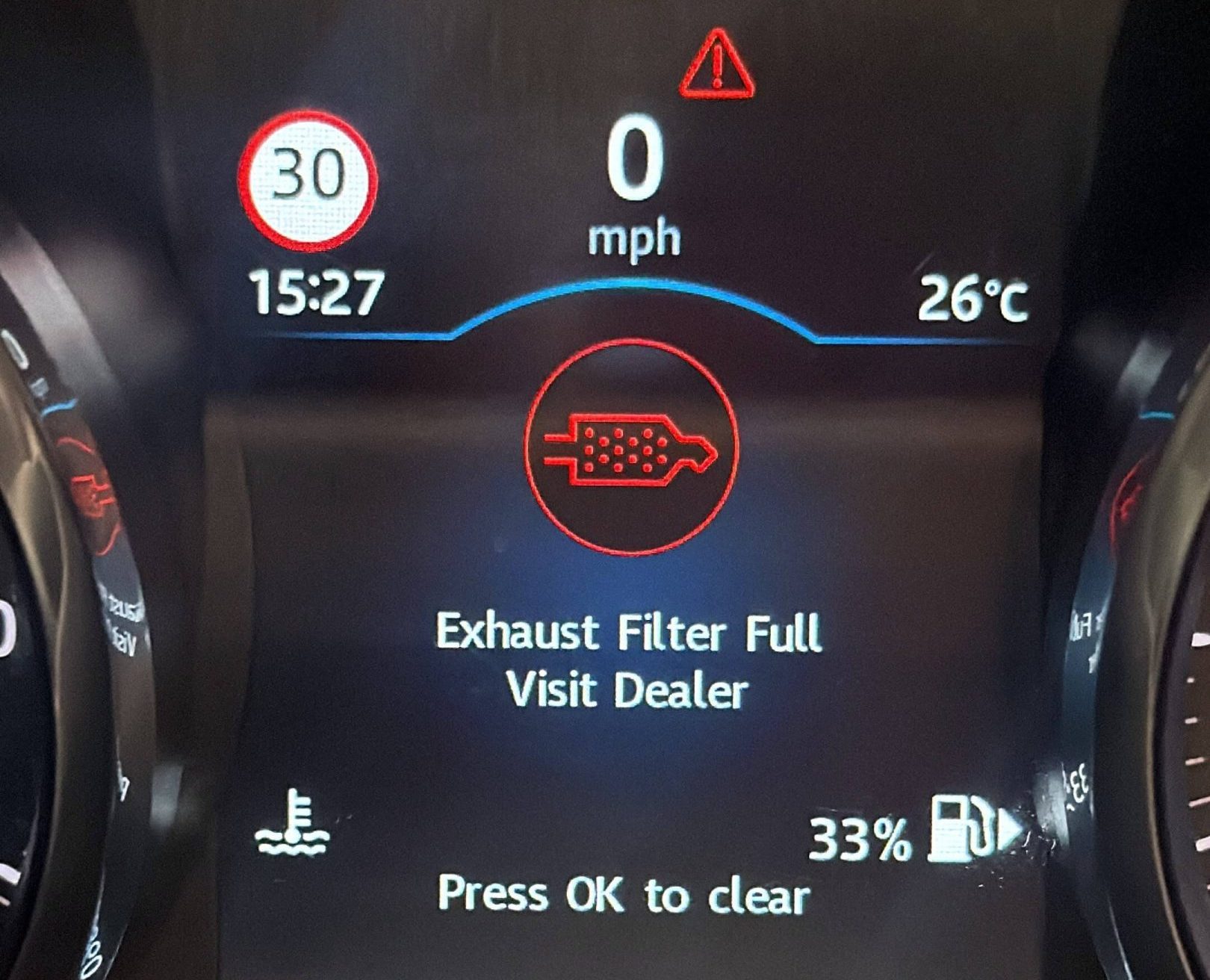
A DPF or exhaust-filter warning should be investigated rather than repeatedly ignored
Not every DPF fault announces itself straight away, but your vehicle will give you clues:
- DPF warning light on the dashboard: This can mean that soot levels in the filter have risen beyond their normal range, or that the vehicle has picked up a fault affecting the DPF or one of the systems that monitors and manages it.
- Reduced engine power or limp mode: Your engine management system may reduce performance when a fault related to engine operation or emissions control is found.
- Increased fuel consumption: If regeneration repeatedly fails to complete, your car may consume extra fuel with every fresh cycle that tries to clear the soot.
- Unusual exhaust smell or visible smoke: If you notice a strong exhaust smell or visible smoke, it can point to a fault within the engine or emissions system and warrants a closer look.
These symptoms can sometimes overlap, and they don’t all point to the DPF.
Modern diesel vehicles depend on multiple interconnected systems, and accurate diagnosis requires specialist assessment.
If you’ve noticed any of the above, let our team at CSN Autos, Wymondham, take a closer look at your DPF.
Helping Your DPF Stay Healthy
You don’t need to be a technical specialist to look after your DPF. A handful of changes to how you drive can make a real difference:
- Drive longer journeys when you can: Longer, uninterrupted drives give the engine and exhaust system the best chance of reaching and maintaining the conditions regeneration depends on.
- Don’t ignore warning lights: Promptly investigating a DPF warning light is important. Delays can allow the underlying fault to worsen.
- Find an expert garage: The root cause of a DPF warning may sit elsewhere in the diesel emissions system, not with the filter itself. That’s why expert assessment matters.
With the diesel particulate filter explained, you’re better placed to spot potential issues before they become more serious. If you’re unsure about anything, our team of experts at CSN Autos, Wymondham, can advise.
Why Choose CSN Autos for DPF Diagnosis and Repair?
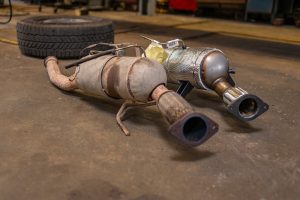
Depending on the fault and condition of the filter, DPF treatment may involve regeneration, cleaning or replacement
Now you’ve had the diesel particulate filter explained, what matters next is finding the right garage and experts if something isn’t right.
DPF faults aren’t always what they first appear… A number of the symptoms that suggest a DPF problem can also originate from faults elsewhere in the diesel emissions system, which is why accurate diagnosis is so important.
At CSN Autos, Wymondham, our technicians combine manufacturer-level software with proven diagnostic processes to get to the root of DPF and emissions-system faults.
Where appropriate, we carry out DPF-related repairs, regeneration procedures, cleaning, or replacement in accordance with manufacturer repair guidance.
By choosing CSN Autos, you benefit from:
- Experienced technicians with diesel emissions expertise: Our team understands how the DPF, EGR and AdBlue systems interact, so the complete picture is considered.
- Manufacturer-level software and equipment: Paired with our technicians’ hands-on diagnostic experience for accurate fault identification.
- Award-winning service: Recognised as South Norfolk Small Business of the Year 2024 and Top Garage Finalist in 2023 and 2024.
- A courtesy car while yours is with us: So you’re not left without transport.
- Experts serving Wymondham, Norwich and the surrounding area: Specialist diesel emissions care close to home.
- 12-month parts and labour guarantee on all work.
Join the {{review-count}} Wymondham customers who’ve given us a {{average-rating}} Google rating, with honest communication, thorough diagnostics and expert advice singled out again and again.
Call 01953 425983 and book your DPF assessment at CSN Autos, Wymondham, today.
Frequently Asked Questions About Your DPF
What is a diesel particulate filter and why does my car have one?
Your diesel particulate filter (DPF) is fitted to the exhaust, catching soot from the engine before it can reach the atmosphere. Most diesel cars in the UK since around 2009 have come with one as standard, and evidence of DPF removal or tampering can result in an MOT failure.
So how does a DPF work? The filter cleans itself through a process called regeneration, which burns away accumulated soot at high temperature. There are usually two forms: passive regeneration takes place when sustained driving keeps exhaust temperatures high enough to burn away soot naturally, and active regeneration is triggered by the engine management system once soot loading passes a set threshold.
Why does my diesel car need long journeys to stay healthy?
Your DPF needs the exhaust system to reach and maintain suitable operating temperatures, and those conditions develop more readily during longer, continuous journeys. Short trips are some of the most common reasons regeneration doesn’t complete, though faults within the diesel emissions system can also prevent it.
How do I know if my DPF is blocked?
The clearest indicator of a restricted DPF is a DPF warning light on your dashboard. You may also notice reduced engine power, higher fuel consumption, or a change in how the engine responds.
Other faults can produce similar symptoms, so it’s worth having your vehicle assessed by a specialist. Our team at CSN Autos, Wymondham, can investigate and advise.
Can a DPF be repaired, or does it need replacing?
That depends on the condition of the filter and what caused the fault. In many cases, a restricted DPF can be recovered without a full replacement. Our team at CSN Autos, Wymondham, can look at yours and advise on the best way forward.