Mercedes Spring Vehicle Check
It’s easy to assume your Mercedes got through winter without any lasting effects. The engine fires up, the brakes work, and nothing feels out of place.
Yet winter conditions rarely leave a vehicle untouched… wear often accumulates gradually, without anything to alert you that something has changed.
Months of icy starts, salted roads, standing water and uneven surfaces can promote corrosion and mechanical strain across vital components. By the time spring arrives, your Mercedes may be carrying underlying damage that only becomes apparent once your driving patterns change and the warmer weather sets in.
Getting your Mercedes checked in spring lets you catch these concerns before they become more significant or more expensive.
To help you understand why a Mercedes spring vehicle check is worth your attention and what to be aware of following the colder months, the team at CSN Autos, Wymondham, have prepared this helpful guide.
Throughout this guide, you’ll uncover what winter can do to your Mercedes, why key areas are worth reviewing, and how a seasonal assessment helps keep your car safe, reliable and performing as it should as you head into warmer weather.

Why Should You Think About a Mercedes Spring Vehicle Check?
Winter puts every vehicle under strain, and even a well-engineered car like your Mercedes isn’t immune to seasonal wear.
Many of the systems throughout your Mercedes, including braking, suspension, battery and electrical components, can be affected by extended exposure to cold, damp and contaminated road conditions.
Common examples include:
- Pothole impacts can knock wheel alignment out of specification without any obvious sign that something has changed.
- Frequent short trips during winter often prevent your engine and battery from consistently reaching full operating temperature and charge, placing unnecessary strain on both.
- Freeze-thaw cycles speed up the ageing of rubber seals, bushes and hoses compared to milder conditions.
- Road salt hastens corrosion on exposed metalwork, brake components and underbody fixings.
The difficulty is that a lot of this wear builds up without warning.
Your Mercedes may still feel completely fine to drive, even when components are already worn, weakened or functioning below their intended level.
Identifying these issues in spring catches them before they can affect safety, performance, or reliability. It’s also significantly cheaper to address minor wear now than to face the knock-on costs that develop when problems go unnoticed.
In practical terms, having your Mercedes checked in the spring helps to:
- Recognise any deterioration in braking performance, handling or ride quality after months of tough driving conditions.
- Uncover winter-related wear before it progresses or causes component failure.
- Support fuel efficiency and smooth engine performance by catching developing problems before they take hold.
- Minimise the likelihood of unexpected breakdowns, MOT failures and avoidable repair bills.
Treating it as a pre-Easter or pre-summer vehicle check can help with scheduling.
A spring car check Wymondham gives you the ideal opportunity to address winter-related wear before longer journeys and holiday driving place additional pressure on components that may already be showing signs of fatigue.
Spring Checks That Could Save Your Mercedes from Costly Repairs
A Mercedes spring vehicle check comes down to understanding where winter may have taken its toll and whether anything requires attention.
Winter wear doesn’t always show up as a warning message or a change in how your car performs. Many of the most commonly affected areas lie beneath the surface and can continue to wear until the problem becomes far more costly to resolve.
Here are the key areas worth reviewing after the colder months:
Tyres and Wheel Alignment

Potholes, road debris and deteriorating surfaces can all leave their mark on your tyres over winter, causing uneven wear, sidewall damage or gradual air loss that you might not notice until it’s pointed out.
Tyre pressures are also worth checking. Cold temperatures cause pressures to drop, and if yours haven’t been adjusted since autumn, they could now be sitting outside the recommended range.
Wheel alignment is another area that often suffers during the colder months. Mercedes vehicles are engineered with precise suspension geometry, and even minor impacts can push alignment out of specification. Once that happens, your tyres wear unevenly, and the car may start to pull or wander, affecting both handling and tyre life.
If your tyres haven’t been looked at since before winter, having alignment, condition, pressures and tread depth checked is a worthwhile step to confirm your Mercedes is tracking correctly and your tyres are safe and legal for the road ahead.
Brakes

Your braking system takes a beating during winter. Wet roads, road salt and frequent braking all speed up wear on pads, discs and callipers, while salt and moisture can cause corrosion to build up on your brake discs.
This is especially true if your car has been standing for any length of time or seeing less regular use.
For your Mercedes to deliver the braking performance it was built for, disc thickness, pad condition and calliper function all need to be within specification. When any of these drop below the required level, braking capability can be reduced, and the system may not respond the way you’d expect when you need it most.
Spring is a sensible time to have disc and pad wear, corrosion and calliper condition assessed after months of demanding winter driving, giving you confidence that your braking system is still performing as it should.
Battery
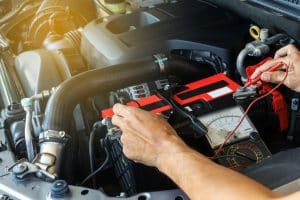
Cold weather is among the biggest contributors to battery strain. The lower winter temperatures reduce your battery’s performance, and short winter journeys can prevent it from reaching a complete charge.
By spring, a battery that felt reliable in autumn may have deteriorated more than you’d expect.
As part of a wider Mercedes spring vehicle check, the battery is an area that deserves close attention.
Your Mercedes relies on the battery for much more than starting the engine. Control modules, sensors and comfort systems all continue to draw power even when the car is parked, so a weakening battery can have a wider impact than you might realise.
Common signs include slow cranking, unexpected warning messages, electrical systems behaving inconsistently, or stop-start not operating as it should. Because modern Mercedes systems depend on stable voltage to function correctly, a tired battery can sometimes cause faults that seem entirely unrelated at first glance.
If your Mercedes battery has been in service for a few years, or you’ve started to notice any hesitation when starting, spring is a sensible time to have it assessed before it fails when you least expect it.
Fluids

Winter conditions can affect the key fluids your Mercedes depends on, from engine oil and coolant through to brake fluid and screenwash.
Shorter journeys during the colder months are a frequent cause of oil degradation. When your engine doesn’t consistently reach full operating temperature, moisture can accumulate in the oil, diminishing its ability to protect internal components effectively.
Coolant is worth examining too. After months of cold-weather use, both the level and antifreeze concentration can shift, and it’s important to confirm they’re still within the correct range.
Brake fluid is another area that merits attention during a Mercedes spring vehicle check. It absorbs moisture naturally over time, which can weaken braking performance and contribute to corrosion developing inside the braking system.
If your Mercedes hasn’t been serviced in a while, spring is a good time to have your fluid levels and condition checked across the board.
Suspension and Steering
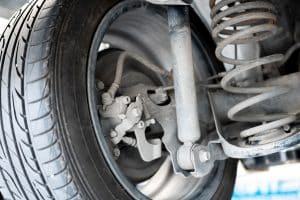
Your vehicle’s springs, shock absorbers, anti-roll bar links, bushes and steering joints all absorb significant punishment from potholes, rough roads and uneven surfaces throughout winter.
Over time, this repeated strain can result in worn bushes, leaking dampers, or play developing in steering components.
As modern Mercedes suspension systems are designed to deliver a balance between comfort and control, even modest wear can disrupt that balance. Your car may feel less assured over uneven ground, pick up more road noise, or the steering may not respond as sharply as it once did.
These shifts often develop so gradually that they go unnoticed. But if you’ve noticed any changes in ride comfort, unusual knocking over bumps, or a difference in steering feel, winter wear may already be affecting components beneath the surface.
Getting these concerns looked at early helps avoid further strain on related parts and preserves the driving feel your Mercedes was engineered to provide.
Lights, Wipers and Visibility

After months of clearing ice, frost and road grime, your wiper blades may be cracked and worn, while headlight lenses can develop hazing or stone chips that reduce light output. Bulbs that have been used more heavily during longer winter nights may also be closer to failing.
These might seem like minor concerns, but clear visibility and fully operational lights are essential for safe driving, and they are also items inspected during your MOT.
Spring is a good time to take stock. If your wipers are leaving marks across the screen, your headlights seem weaker than they used to, or your bulbs are only replaced once they’ve gone, it’s worth addressing these issues before they become a safety or MOT concern.
Need a Mercedes Spring Vehicle Check in Wymondham? CSN Autos Can Help
Many of the issues discussed in this guide don’t show up all at once. They develop gradually, which is precisely why a post-winter car inspection can be worthwhile before symptoms become more noticeable and repairs more expensive.
Getting your Mercedes professionally assessed after winter gives you a clear, honest view of its current condition. You’ll understand what needs attention now, what’s worth watching, and how your vehicle stands in terms of safety and reliability as the seasons change.
As an award-winning independent Mercedes specialist Wymondham, CSN Autos has the knowledge, experience and equipment to assess your vehicle to the same standard you would expect from a main dealer. You also get the personal service and exceptional value that comes from choosing an independent garage.
Here’s why drivers across Wymondham choose the team at CSN Autos:
- Skilled Mercedes specialists with hands-on experience of your vehicle.
- All repairs backed by a 12-month parts and labour guarantee.
- A courtesy car is provided so you’re not left without transport.
Join the {{review-count}} local drivers who’ve rated us {{average-rating}} stars on Google for accurate repairs, excellent servicing and outstanding value.
Whether you’ve noticed something that doesn’t feel right, your Mercedes is overdue for a spring car service Wymondham, or you simply want confidence before the warmer months, speak to our team at CSN Autos, Wymondham today.